
Hardcover, 4 volumes, 530+554+516+617 pages, New York 2023, new
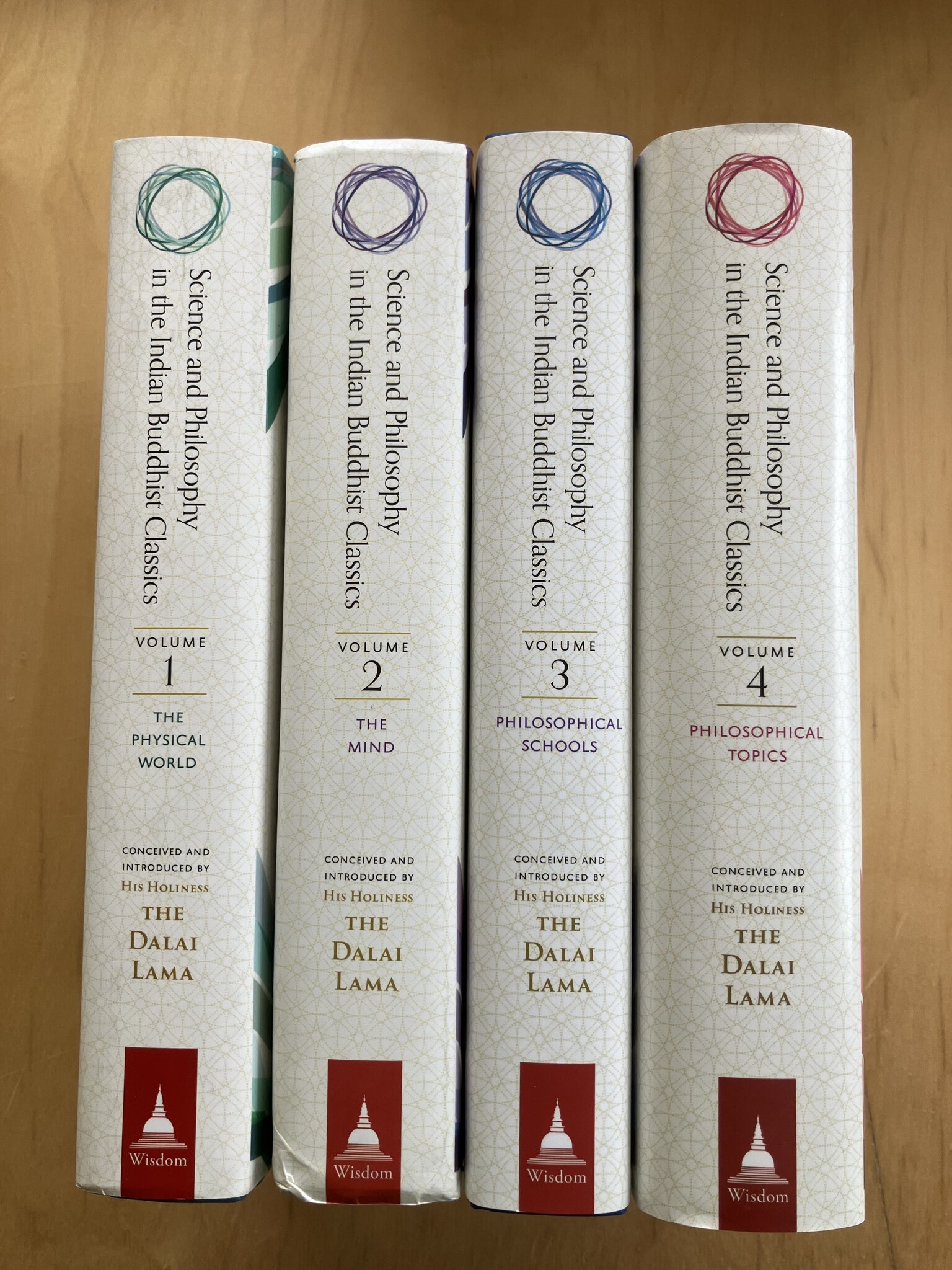
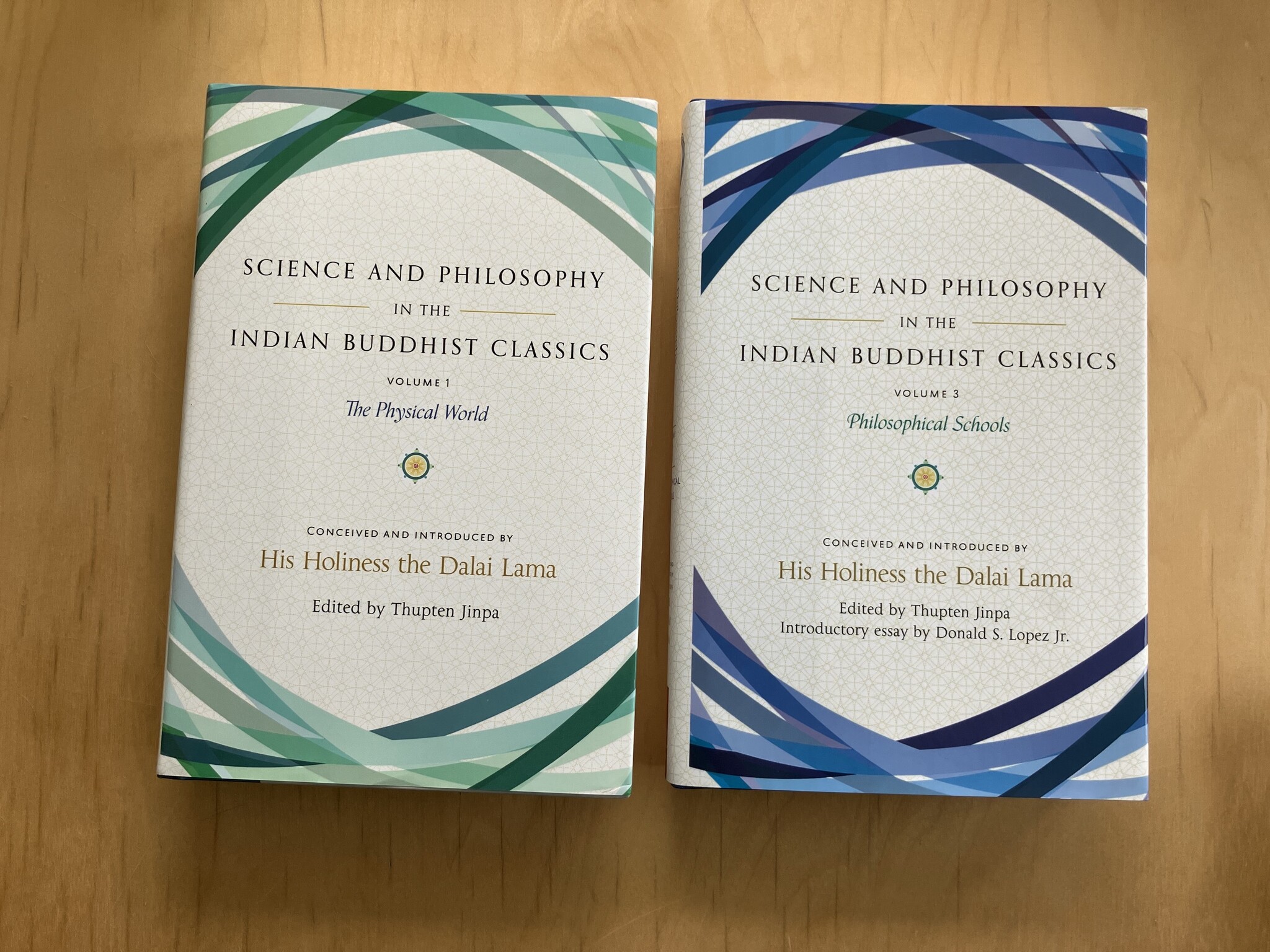
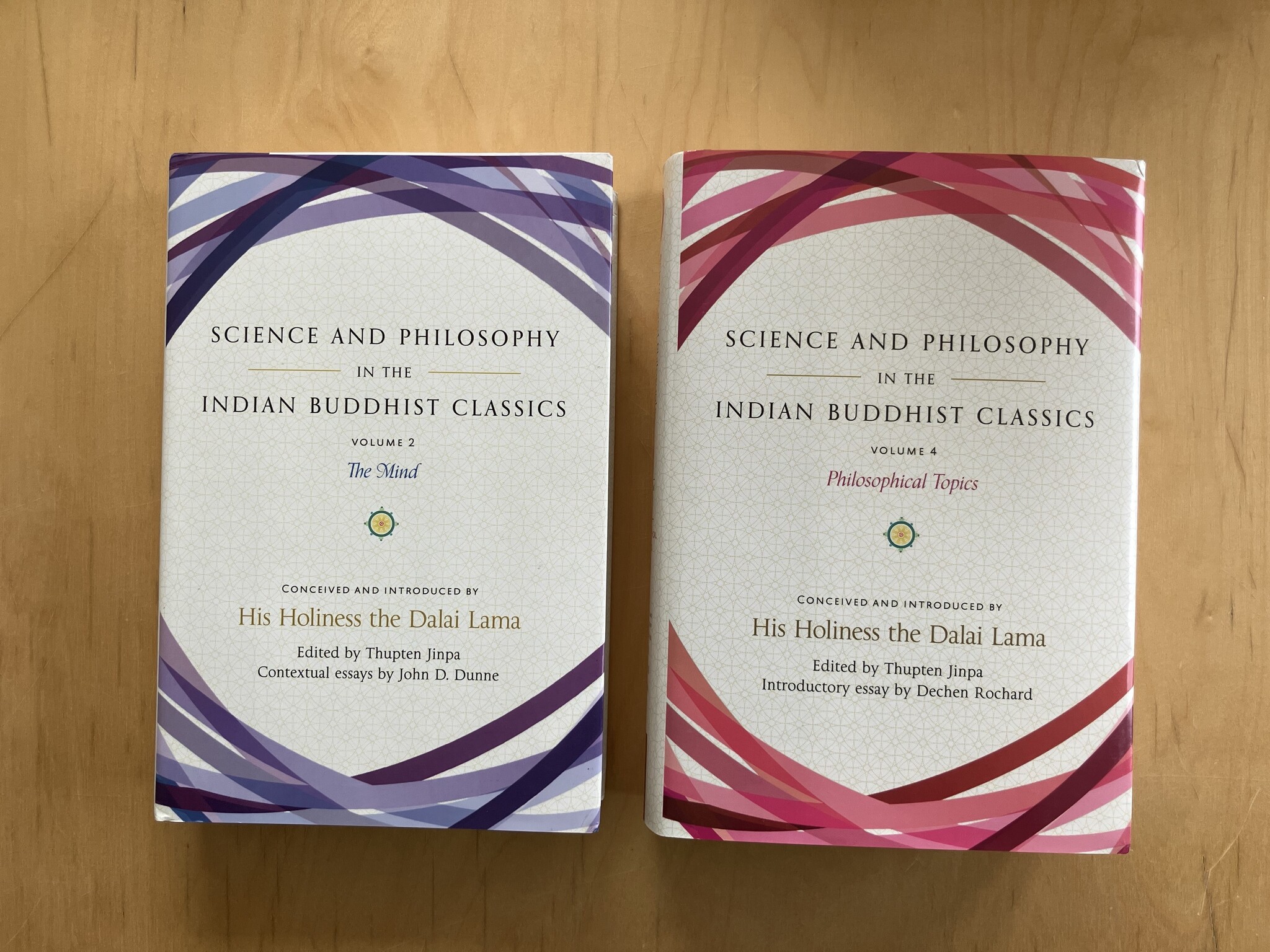


Explore the nature of our material world in a unique sourcebook, conceived by the Dalai Lama, collecting the scientific observations found in classical Buddhist treatises.
Under the visionary supervision of His Holiness the Dalai Lama, Science and Philosophy in the Indian Buddhist Classicsbrings together classical Buddhist explorations of the nature of our material world and the human mind and puts them into context for the modern reader. It is the Dalai Lama’s view that the explorations by the great masters of northern India in the first millennium CE still have much that is of interest today, whether we are Buddhist or not.
Volume 1, The Physical World, explores the nature of our material world—from the macroscopic to the microscopic. It begins with an overview of the many frameworks, such as the so-called five aggregates, that Buddhist thinkers have used to examine the nature and scope of reality. Topics include sources of knowledge, the scope of reason, the nature and constituents of the material world, theories of the atom, the nature of time, the formation of the universe, and the evolution of life, including a detailed explanation of the early Buddhist theories on fetal development. The volume even contains a brief presentation on early theories about the structure and function of the brain and the role of microorganisms inside the human body. The book weaves together passages from the works of great Buddhist thinkers such as Asanga, Vasubandhu, Nagarjuna, Dignaga, and Dharmakirti. Each of the major topics is introduced by Thupten Jinpa, the Dalai Lama’s principal English-language translator and founder of the Institute of Tibetan Classics.
The second volume, The Mind, focuses on the science of mind. Readers are first introduced to Buddhist conceptions of mind and consciousness and then led through traditional presentations of mental phenomena to reveal a Buddhist vision of the inner world with fascinating implications for the contemporary disciplines of cognitive science, psychology, emotion research, and philosophy of mind. Major topics include
– The distinction between sensory and conceptual processes and the pan-Indian notion of mental consciousness
– Mental factors—specific mental states such as attention, mindfulness, and compassion—and how they relate to one another
– The unique tantric theory of subtle levels of consciousness, their connection to the subtle energies, or “winds,” that flow through channels in the human body, and what happens to each when the body and mind dissolve at the time of death
– The seven types of mental states and how they impact the process of perception
– Styles of reasoning, which Buddhists understand as a valid avenue for acquiring sound knowledge
In the final section, the volume offers what might be called Buddhist contemplative science, a presentation of the classical Buddhist understanding of the psychology behind meditation and other forms of mental training.
To present these specific ideas and their rationale, the volume weaves together passages from the works of great Buddhist thinkers like Asaṅga, Vasubandhu, Nāgārjuna, Dignāga, and Dharmakīrti. His Holiness the Dalai Lama’s introduction outlines scientific and philosophical thinking in the history of the Buddhist tradition. To provide additional context for Western readers, each of the six major topics is introduced with an essay by John D. Dunne, distinguished professor of Buddhist philosophy and contemplative practice at the University of Wisconsin. These essays connect the traditional material to contemporary debates and Western parallels, and provide helpful suggestions for further reading.
In the third volume, Philosophical Schools, the focus turns to exploring the philosophical schools of India. The practice of presenting the views of various schools of philosophy dates back to the first millennium in India, when proponents of competing traditions would arrange the diverse sets of philosophical positions in a hierarchy culminating in their own school’s superior tenets. Centuries later, relying on the Indian Buddhist treatises, Tibet developed its own tradition of works on tenets (grub mtha’), often centered on the four schools of Buddhist philosophy, using them to demonstrate the philosophical evolution within their own tradition, and within individual practitioners, as they progressed through increasingly more subtle expressions of the true reality.
The present work follows in this venerable tradition, but with a modern twist. Like its predecessors, it presents the views of seven non-Buddhist schools, those of the Samkhya, Vaisesika, Nyaya, Mimamsa, Vedanta, Jaina, and Lokayata, followed by the Buddhist Vaibhasika, Sautrantika, Cittamatra, and Madhyamaka schools, arranging them like steps on a ladder to the profound. But rather than following in the sharply polemical approach of its ancient predecessors, it strives to survey each tradition authentically, relying on and citing the texts sacred to each, allowing the different traditions to speak for themselves. What, it asks, are the basic components of the world we experience? What is the nature of their ultimate reality? And how can we come to experience that for ourselves? See how the rich spiritual traditions of India approached these key questions, where they agreed, and how they evolved through dialogue and debate.
Philosophical Topics, the fourth and final Science and Philosophy in the Indian Buddhist Classics volume provides, through extensive passages, a window into the works of the great thinkers from the flowering of philosophy in classical India.
This is the second philosophy volume in the Science and Philosophy series. Whereas the first philosophy volume presented the views of the non-Buddhist and Buddhist schools in sequence, the present works selects specific topics for consideration, including the nature of the two truths, the analysis of self, the Yogacara explanation of reality, emptiness in the Madhyamaka tradition, a survey of logic and epistemology, and the Buddhist explanation of language and meaning. Like earlier volumes, it provides, through extensive extracts, a window into the works of the masters of the Nalanda tradition. The final section on language is particularly unique and largely crafted by Thupten Jinpa.